The art of smooth lines: a discussion with Michelle Johnston from France
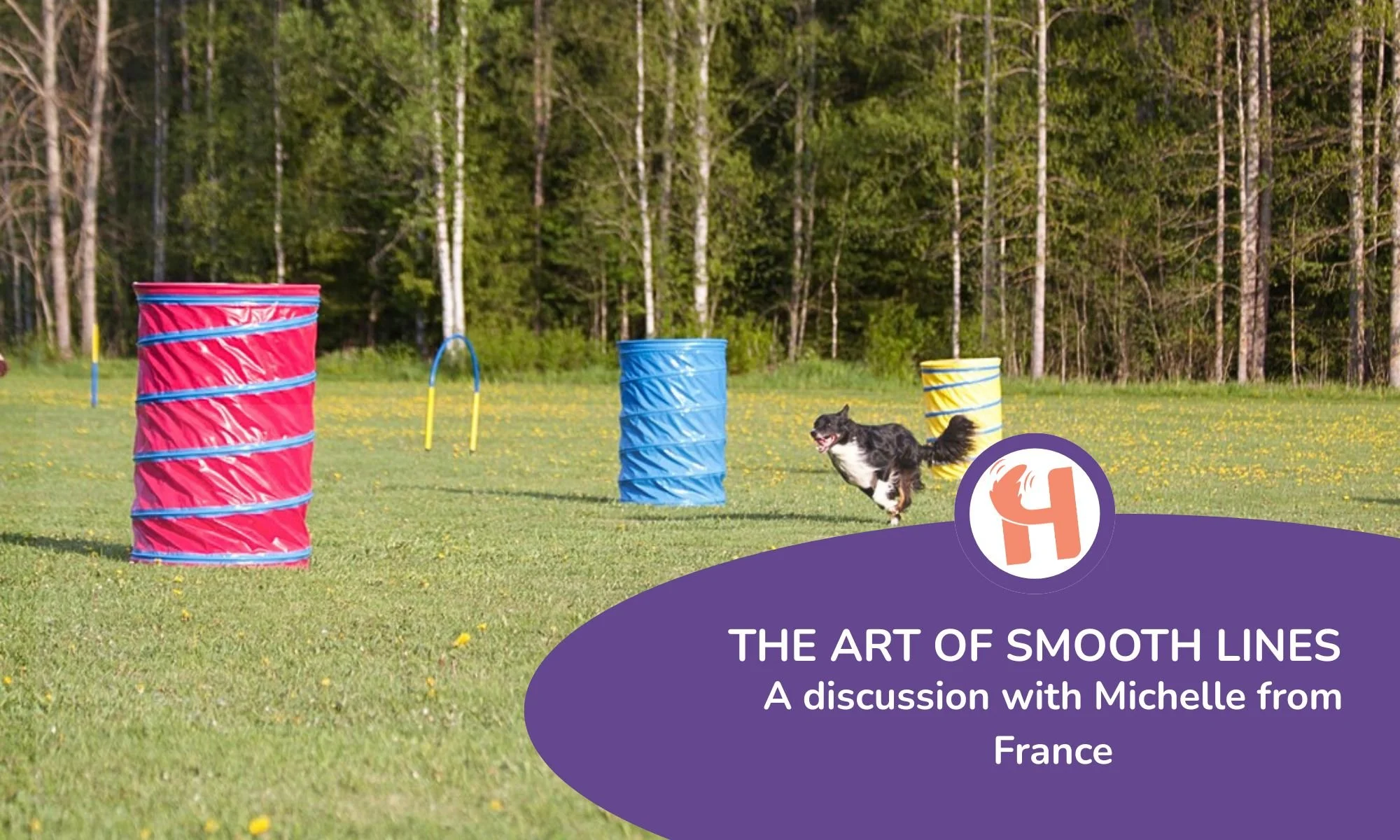
In this article, Michelle Johnston shares her perspective on how thoughtful course design and respect for the dog’s natural movement create safety in hoopers. For her, hoopers is about more than running courses. It’s about teamwork, good lines and keeping the dog safe and confident throughout the whole course.
This is the first part of a two-part blog series based on an interview with Michelle. See the whole series:
PART 1: The art of smooth lines: a discussion with Michelle Johnson from France
PART 2: The heart of hoopers with Michelle Johnston (will be published 4.12.2025)
Finding hoopers
Michelle’s journey began in agility, long before hoopers was recognized as an official sport in France. She originally competed in both obedience and agility, travelling from her home island of Jersey to the UK, and later settling in France. But even back then, she sensed that something was missing.
Michelle says she was interested in the idea of hoopers even before she knew the sport existed. She had long seen the need for a way to handle dogs with less physical strain and less running. What fascinated her most was distance work: the quiet, precise communication between handler and dog that relies on trust and understanding rather than speed.
“Hoopers felt right from the start. It was exactly how I’d always wanted to work with my dogs.”
When hoopers started to become known, Michelle immediately recognised it as the kind of training she had been imagining for years.
What makes a good hoopers course
For Michelle, a good hoopers course feels natural. It allows the dog to move in flowing curves rather than sudden changes of direction. The lines are logical, the rhythm consistent, and every obstacle leads smoothly to the next.
“We don’t need difficult courses to make mistakes. Sometimes even a simple circle can teach us something.”
She worries that some judges might design courses that are unnecessarily tight or technical: perhaps in an attempt to make the sport look more challenging. But, she points out, tight turns and sudden direction changes can compromise what hoopers is meant to be: a gentle, accessible and safe sport for all kinds of dogs.
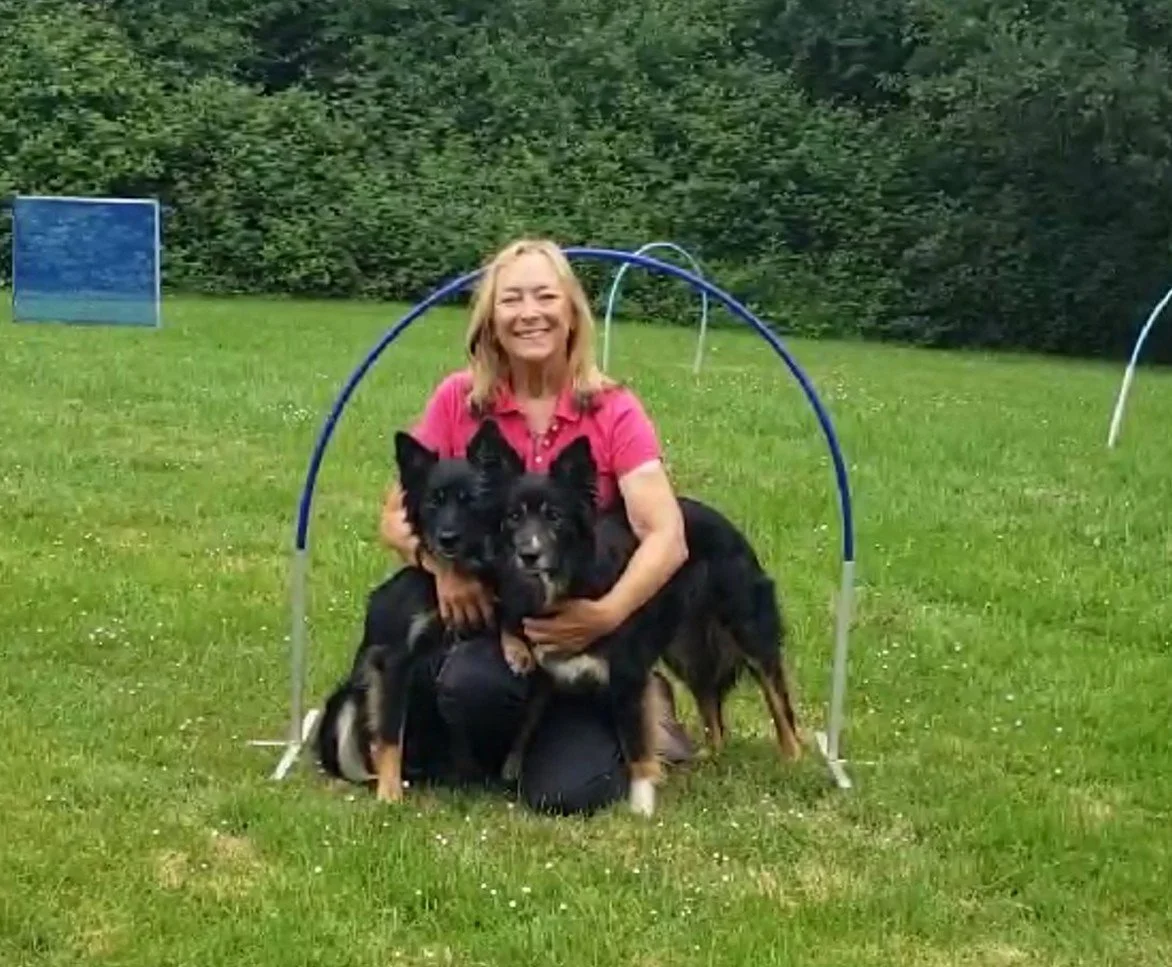
Here is Michelle with her bordercollies Reacher and her daughter Swing.
Understanding dog lines and movement
The shape of a dog’s path (its line) is central to Michelle’s approach. Good lines keep dogs confident and reduce the risk of injury, while poor ones can cause strain and confusion.
Michelle recalls that her perspective on safe lines changed when 180-degree barrel turns started to appear on courses: the kind where the dog returns to the same obstacle it came from (a hoop-barrel-hoop sequence). Trainers, herself included, began to practise these tight turns actively, but before long her own dog started limping. Soon she discovered that two of her friends were facing the same issue.
After consulting an osteopath, she learned what was happening in the dog’s body: when turning sharply around a barrel, the dog pushes down with one front leg while rotating the body in the opposite direction. This movement puts pressure on both the shoulder and elbow joints at the same time. The experience made Michelle rethink how training and course design can better protect the dog’s physical wellbeing.
“People think hoopers is impact-free, but it isn’t if the course isn’t designed carefully. Safe training has to come first, so that the dog understands what to do before we add speed or complexity.”
Teaching for understanding
In both her classes and seminars, Michelle emphasises thoughtful skill development and clear communication between handler and dog. She believes that it is the handler’s responsibility to teach each skill gradually so the dog truly understands what is being asked. By focusing on clarity and steady progression, handlers can prevent confusion and reduce the risk of physical strain or injury. When the dog knows the task, movement becomes natural and confident instead of rushed or uncertain.
Her training approach is based on building understanding layer by layer and strengthening the communication between the team. She encourages handlers to notice how their body position and timing influence the dog’s line and to adjust accordingly. Even in mixed-level groups, Michelle adapts exercises to each team so that everyone has a clear goal and a way to progress at their own pace while keeping learning safe and rewarding.
“When the day is over, I want them to go home thinking, I really want to do that again. That’s the best feedback a coach can get.”
Balancing challenge and safety
As hoopers grows, Michelle hopes it avoids repeating agility’s mistakes. In agility, she’s seen how speed became more important than precision, and how that shift affected both safety and enjoyment. “I don’t want hoopers to go the same way,” she says.
“Judges try to make courses more and more challenging, but fun doesn’t have to mean difficult.”
Michelle is also passionate about fairness in competition. In France, courses are currently the same distances for all dogs, regardless of size, which means small dogs must cover much more ground than larger ones. She believes that adjusting the distances slightly would not make the runs easier, but would create a fairer balance between different types of dogs.
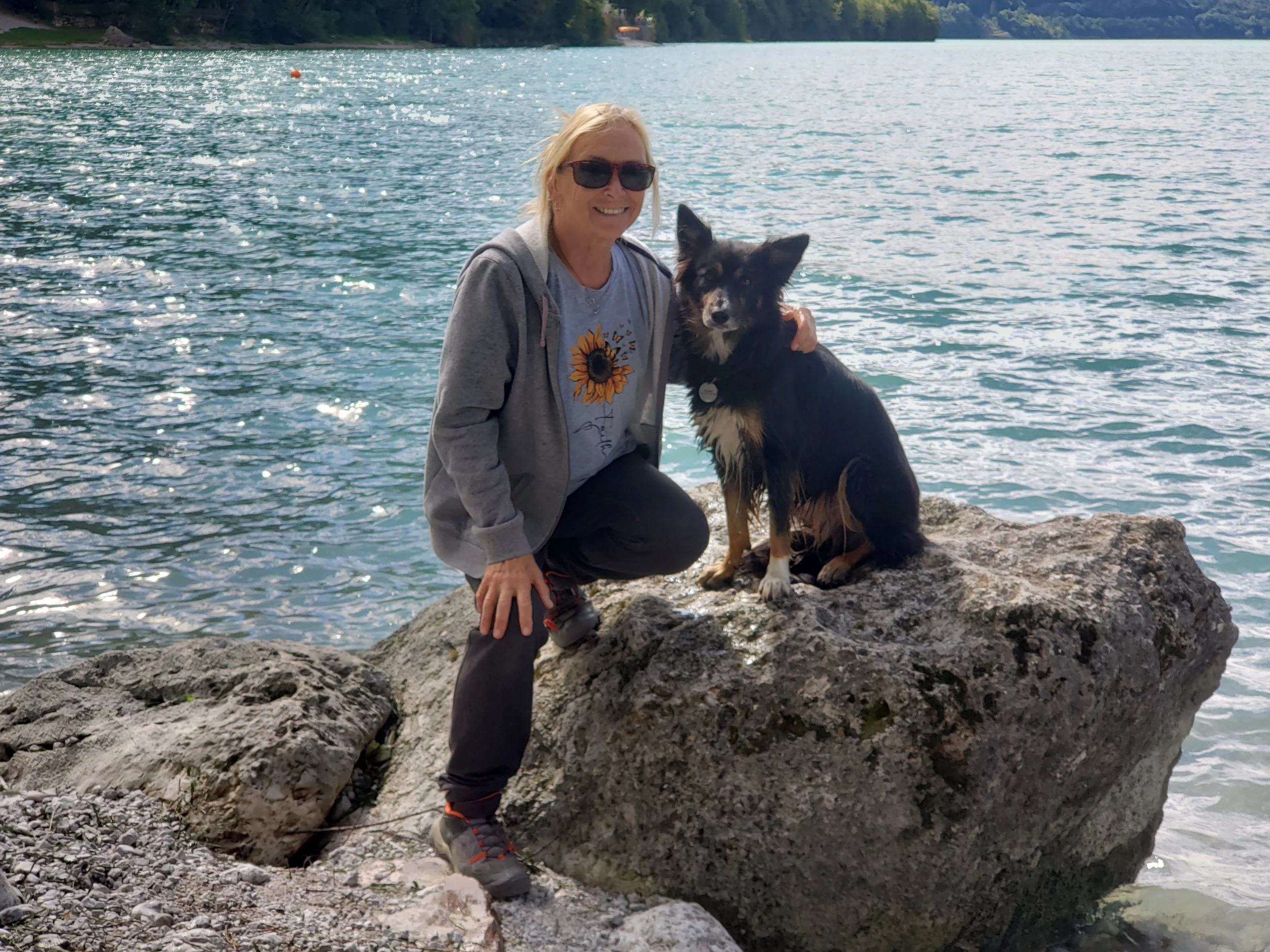
Michelle with her bordercollie Reacher with whom they won WHOC Championships in 2024.
Keeping the lines kind
The heart of Michelle’s message is simple: good lines are kind lines. A well-designed course keeps the dog’s movement smooth and safe. She wants handlers and judges alike to remember that hoopers is not a test of speed, but a dance of trust and communication.
“We sold hoopers to the public as a safe sport and it can be, if we train and design with care. But we must never forget that the dog’s body and mind come first.”
When asked what she hopes for the future of the sport, she says: “I hope hoopers keeps its nice lines. That’s all I want. Flow, connection and happy dogs: that’s the real art.”
Get to know michelle
“My name is Michelle Johnston, and I have been involved in Hoopers since 2017. From the beginning, I saw the incredible potential of this sport and became passionate about establishing it officially in France, where I live. Although it took some convincing at first, an official working group was eventually created; a group I am still part of today. My official role is Technical Adviser. Hoopers was later recognized by the French Kennel Club, and I trained the first instructors and judges, which allowed competitions to begin. These now take place across France every weekend. Hoopers is a true passion for me, and I want to see it continue to grow.
I am a full-time dog trainer, teaching both Hoopers and agility, which I also compete in. As the sport’s popularity is growing quickly, my current focus is mainly on Hoopers. When I hold workshops on my training fields at home, they are most often dedicated to Hoopers. I am also regularly invited to clubs to teach seminars, both for beginners discovering the sport and for high-level competitors, which gives me the opportunity to travel, although the downside is that I cannot take my own dogs with me on these trips.
With my own dogs, I compete in Level 3 and I regularly take part in competitions, but I also judge, and I try to maintain a balance between both roles. The atmosphere at competitions is always warm and brings people together.
Last year (2024), I travelled to Italy to compete at the first World Hoopers Championship. It was an unforgettable experience, and with my dog Reacher, we won the championship, becoming the first Hoopers World Champions. I also help to select and train the French team as we prepare for future World Championships. This year, I was invited to be a coach at the International Hoopers Experience in Italy, which was another wonderful opportunity to share the sport with people who love it as much as I do.
Competitions in France and abroad are a wonderful way for me to connect with people from all over the world who share a passion for Hoopers. I hope this article reaches many readers and that we continue to make new Hoopers friends at competitions everywhere.”
This was the first part of blog articles with Michelle Johnston. You can find the second part here (will be published on 4th December).
Happy Hoopers - for hoopers handlers and coaches
Happy Hoopers is a site designed for hoopers enthusiasts and coaches. Here you’ll find information about the sport, ideas to inspire your training, and insights that go a little beyond hoopers itself. All with the goal of helping you and your dog enjoy the journey together.
The site was founded by Tiina Wikström, a hoopers instructor, coach trainer, and mental performance coach. Tiina is passionate about supporting handlers and coaches in creating positive, motivating, and enjoyable training experiences for both dogs and humans.
Whether you’re just starting your hoopers adventure or you’re an experienced trainer looking for fresh perspectives, Happy Hoopers is here to spark your creativity and keep your sessions fun and purposeful.
Learn more: www.happyhoopers.fi