The heart of hoopers with Michelle Johnston
This is the second part of a two-part series based on an interview with Michelle Jonston, a French hoopers trainer, judge and one of the pioneers of the sport in France. In this article, she reflects on how hoopers took shape in France, why fairness and clear competition practices matter to her, and how the spirit of the sport, connection, joy and a supportive atmosphere, can be preserved as hoopers continues to grow. Get to know Michelle from here.
See the whole serie:
PART 1: The art of smooth lines: a discussion with Michelle Johnston from France
PART 2: The heart of hoopers with Michelle Johnston
Building hoopers in France
In the early days of hoopers in France, Michelle faced resistance when she proposed including the sport in the country’s official dog training program. As one of the few women, and a foreigner, in the group, it wasn’t easy to be heard. Still, her conviction never wavered. “I believed in it, and I still do” she says. For her, hoopers has always been about staying true to what makes it special: the genuine connection between handler and dog.
When hoopers was first introduced in France, its growth was slow. Michelle and a small group of enthusiasts organised demonstrations to show what dogs could do and to spark interest in the new sport. Many people were unsure at first, some considered it too simple to be engaging, while others thought it looked too difficult to succeed.
But a small group of enthusiasts kept the idea alive. Michelle went on to judge the very first hoopers competition in France: a small beginner’s course was executed in the rain. The atmosphere was light-hearted and full of curiosity. Some participants were so new to the sport that they were still learning what each obstacle was for.
From those modest beginnings, hoopers has grown into a thriving part of the French dog sport community, with new judges, trainers and clubs joining each year. Yet, as Michelle points out, growth alone isn’t success. What matters is maintaining the values that make hoopers unique.
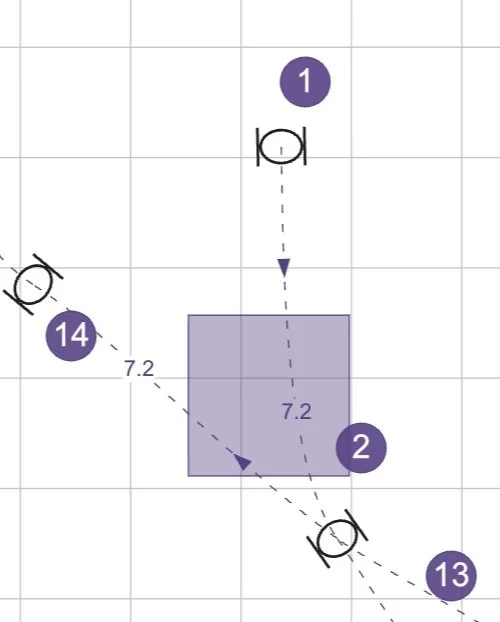
Speciality in French hoopers:
In the first class handling area can be max 3 meters away from the first hoop and the handler should be able to be on the straight line behind the hoop. That is why handling areas are located on the dogs path.
The debate on timing in hoopers
One of the ongoing discussions in the hoopers world is whether runs should be timed. Michelle has mixed feelings about it. She dislikes the pressure that a focus on speed can create, yet she understands that timing also plays a role in fairness. Without it, results may feel unclear, a smooth but slow round might be judged the same as one that is less precise but faster.
She believes the key is to keep the spirit of hoopers at the centre. Rules should promote fairness and enjoyment rather than competition for its own sake. “What matters most is that people leave the competition feeling they had a really good day,” she says.
The heart of hoopers: connection and joy
Michelle’s love for her dogs is at the centre of everything she does. She often reminds people that confidence and joy come from how we speak to our dogs, and that belief shapes her whole approach to training.
“If you want your dog to be a champion, you need to tell them that all the time.”
For her, hoopers is not about trophies or rankings but about those fleeting moments of true connection when handler and dog move as one. She values the fact that, even if something goes wrong, dogs can still complete their run with pride and receive praise at the end. There are no bars to knock down or harsh stops, just the shared joy of working together.
She believes that this sense of freedom is what makes hoopers so special. Even when a round doesn’t go perfectly, there can be a moment when everything feels right, a sense of complete connection between handler and dog. For Michelle, that feeling of harmony is the real reward.
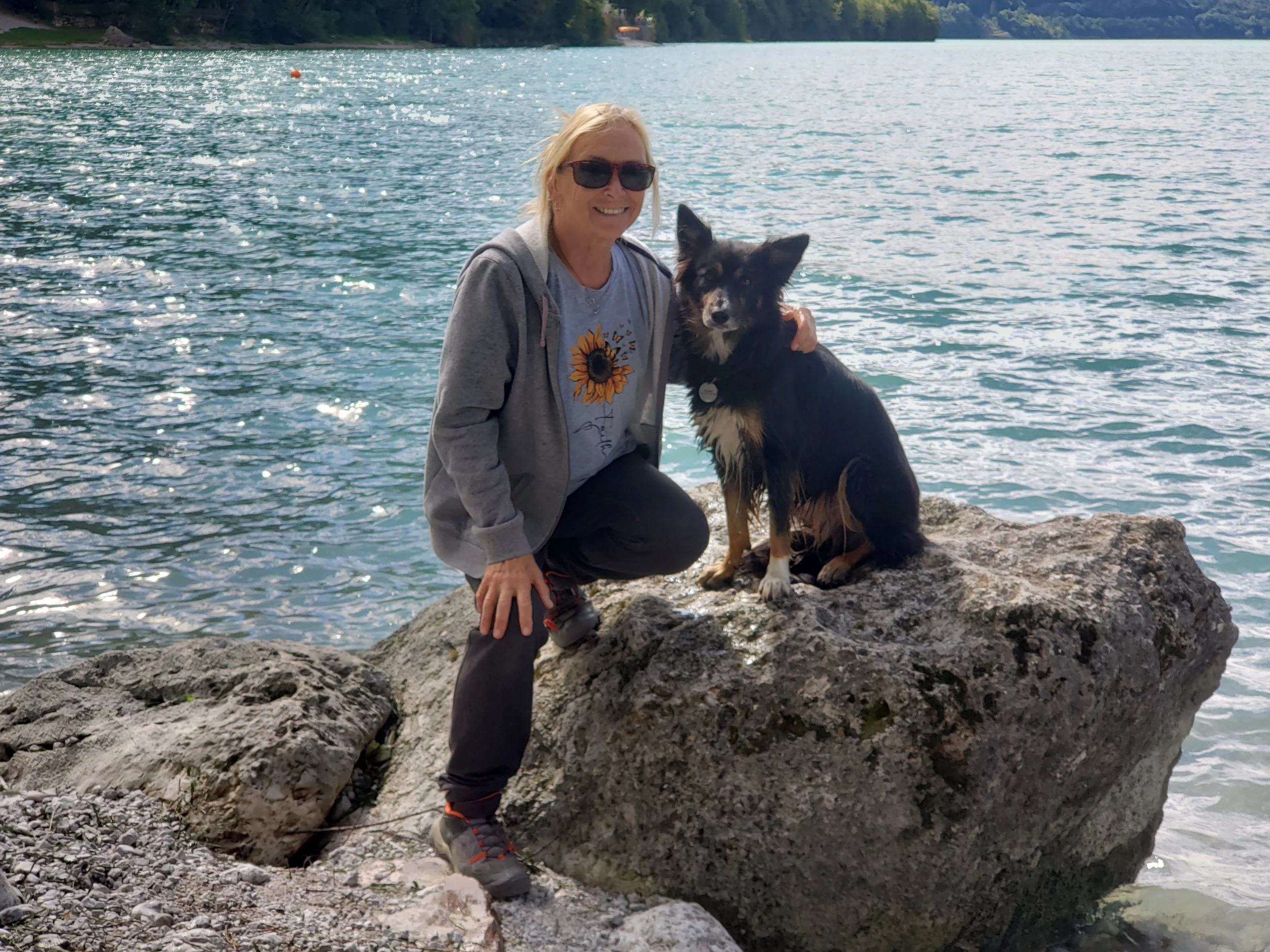
Here you can see Michelle with her bordercollie Reacher.
Keeping the spirit alive
For Michelle, hoopers still carries the freshness and sense of community that agility once had. Competitions feel relaxed and welcoming, more like shared celebrations than high-pressure events. People talk, smile and support each other; they come for the experience, not just the results.
As hoopers continues to grow across Europe, Michelle hopes the sport will hold on to that same essence of simplicity, joy and kindness. She believes its future depends on staying true to what first made it special: the effortless flow between dog and handler, and the feeling of teamwork built on trust rather than control.
Having witnessed how agility evolved toward greater speed and complexity, she wishes hoopers will take a gentler path. For her, progress means developing clearer understanding, not adding difficulty for its own sake. A well-designed course should bring out the best in both members of the team, movement that feels natural, confident and safe.
Michelle also dreams of a sport that remains inclusive. She wants every dog, regardless of size, age or ability, to find success and joy in the course. For her, fairness and wellbeing are inseparable from the spirit of hoopers. “I hope hoopers stays fun, simple, and true to itself,” she says.
“Flow, connection, and happy dogs. That’s what hoopers should always be about.”
This was the second part of blog articles with Michelle Johnston. You can find the first part “The art of smooth lines: a discussion with Michelle from France” HERE.
Happy Hoopers - for hoopers handlers and coaches
Happy Hoopers is a site designed for hoopers enthusiasts and coaches. Here you’ll find information about the sport, ideas to inspire your training, and insights that go a little beyond hoopers itself. All with the goal of helping you and your dog enjoy the journey together.
The site was founded by Tiina Wikström, a hoopers instructor, coach trainer, and mental performance coach. Tiina is passionate about supporting handlers and coaches in creating positive, motivating, and enjoyable training experiences for both dogs and humans.
Whether you’re just starting your hoopers adventure or you’re an experienced trainer looking for fresh perspectives, Happy Hoopers is here to spark your creativity and keep your sessions fun and purposeful.
Learn more: www.happyhoopers.fi